
Most Salesforce work does not go wrong through incompetence. It goes wrong because steps get skipped: architecture decided during build, requirements discovered in UAT, a data model nobody documented, a handover that never happened. Each shortcut is reasonable on the day. The bill arrives two years later.
We work in five stages, and each one ends in something written. That is not process for its own sake. It is what makes an engagement reversible: if we are wrong about something, it is on paper where you can find it and argue with it, rather than discovered late by the people who have to live with it.
It also means you are never dependent on our memory, our goodwill, or our continued availability. We think that is the minimum a client should expect, and we know it is not always what they get.
Assess, discover, define, design, execute, or just AD³E.
Not every engagement needs all five. A short piece of work might be one stage. What does not change is that we do them in order, and that each one produces something you keep.
Our approach draws on the Design Council’s Double Diamond Framework for Innovation, adapted for Salesforce delivery.
We assess what you have, understand what your people need, and explore solutions before committing to a build. Each stage leaves you with clear decisions and documentation you own.
From understanding to delivery
Explore broadly. Decide with evidence.
Assess
See where you stand
Discover
Explore the needs
Define
Focus the challenge
Design
Explore and choose
Execute
Build, test and deliver
- 01
Assess
Understand what is actually there.
Current architecture, data model, processes and automations. We identify the risks and the flaws, and we say which of them matter. This is where most engagements should start and most do not.
You getAssessment report
- 02
Discover
Understand what the business needs.
Business needs mapped against requirements, with a vision and an architectural direction. Initial solutions are proposed here, not decided and the scope is written down before anyone builds anything.
You getDebrief and statement of work
- 03
Define
Remove the unknowns before they cost money.
Research into the areas that carry real uncertainty, so the design phase rests on evidence. Where something cannot be settled on paper we build a proof of concept and find out.
You getResearch analysis, proof of concept
- 04
Design
Decide, and write it down.
Several possible solutions elaborated and compared, then one chosen: architecture, data model and the specific processes it supports. Documented in full before configuration begins.
You getSolution design report
- 05
Execute
Build it in stages, and prove each one.
Implementation, configuration and development through development, UAT, staging and production. Quality assurance and testing at every stage rather than at the end, where it is too late to be useful.
You getUAT results, peer reviews, data dictionary
Documentation that survives us leaving.
Written, not verbal
Every stage ends in a document. Nothing important lives only in someone’s head or in a meeting nobody minuted.
Yours to keep
The assessment report, the solution design and the data dictionary are yours. Take them to another partner if you decide to. That is the test of whether documentation is real.
Written to be handed over
Documented so your own team, or the next firm, can pick the work up. An org only we can maintain is a failure, not a retainer.
Six things we will not do.
These are worth stating plainly because the opposite of each one is common, and because you have no way of knowing which sort of firm you are speaking to until it is expensive to find out.
We will not simply agree with you
If we think an idea is flawed we will say so, once, clearly, and then do what you decide. A consultant who agrees with everything is expensive and useless.
We will not use jargon to look competent
Complex things explained simply, in your language rather than ours. If you need a translator to read our report, the report has failed.
We will not promise what we cannot deliver
An estimate we are unsure about is given as a range with the reason. Overpromising buys one engagement and costs the relationship.
We will not force a framework
The method below is how we work, not a template we impose. It adjusts to how mature your org is, how your organisation makes decisions, and how urgent the problem is.
We will not get involved in your politics
We will read the room, and we will not play in it. Recommendations are based on the facts and our expertise, not on who asked for them.
We will not leave you dependent on us
Knowledge transfer is part of the work, not a phase that gets cut when the timeline slips. You should be able to sustain the improvements after we have gone.
The method, on real engagements.
All case studies →
An Agentforce-powered booth that converted a quarter of its visitors
We built a gesture-controlled, agent-driven game for Salesforce Agentforce World Tour Copenhagen and captured structured lead data straight into Salesforce.
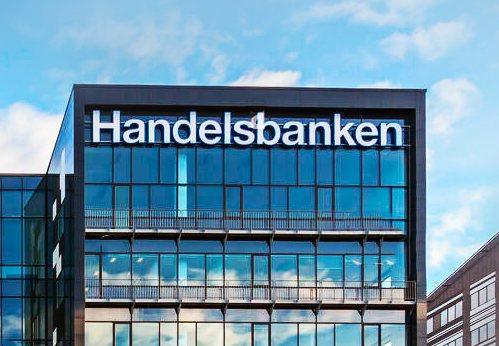
Digitising ODD and KYC at one of the Nordics’ oldest banks
We rebuilt Handelsbanken’s Operational Due Diligence and Know Your Customer processes inside Salesforce for nearly 200,000 private and corporate accounts in Denmark.
What each of us signs up to.
Our manifesto, professional habbits and principles, all in one place. It is a commitment to our clients, to our colleagues, and to ourselves. It is the standard we hold each other to, and the standard you can expect from us.
- I don’t just do the work, I get to the root of it.
- I assess. I discover. I design. I deliver.
- I respect others, their opinions, and their needs.
- I listen with full attention, with a single goal: to truly understand.
- I speak only with meaning and relevance.
- I present ideas rooted in experience, not headlines, not hearsay.
- I observe. I advise. I execute.
As an Advension Professional, this is my commitment!
No one should take the hard walk alone.
We’ve walked this trail before.
Let us show you the way.
The first session is on us!
Start with a free conversation with one of our architects. Bring the problem, even if you have no brief yet.